The Green River below Flaming Gorge Dam is one of the most productive trout fisheries in the American West, and the rules that protect it are the reason it stays that way. Before you wade into Section A or push a drift boat off at the dam, knowing the current green river fishing regulations keeps your trip legal, protects the fishery, and saves you an awkward conversation with a conservation officer. This guide walks through the special regulations, gear rules, daily limit, license information, and closed waters that apply to this stretch of the Green River, all drawn from the Utah Fishing Guidebook.
A quick disclaimer first. Utah’s Division of Natural Resources reviews fishing regulations every year, so the details below are accurate as published, but you should always confirm the latest rules in the current Utah Fishing Guidebook before you fish.
How Utah Structures Its Fishing Regulations
Utah fishing regulations work on two layers. There are statewide general rules that apply to most waters by default, covering the statewide minimum size and daily limit for trout, statewide gear rules, and basic license requirements. Layered on top are the statewide freshwater species rules that set baseline handling and harvest expectations across Utah’s freshwater fisheries. Then there are special regulations for specific waters that override those statewide freshwater regulations wherever a fishery needs extra protection. The Green River below Flaming Gorge falls squarely in that second category. Because it is a blue ribbon tailwater holding extraordinary numbers of trout, it carries special regulations that are stricter than the statewide defaults, and those are the rules you need to follow on the water.
The Special Regulations on the Green River Below Flaming Gorge
From the Colorado state line in Browns Park upstream to Flaming Gorge Dam, the Green River is governed by a protected-slot regulation. Here is what the Utah Fishing Guidebook currently lists for this stretch of river:
Green River Trout Rules at a Glance
- Daily limit of three trout, of which only two may be under 15 inches and only one may be over 22 inches.
- All trout from 15 to 22 inches must be released immediately. That protected slot covers the prime breeding-age fish.
- Artificial flies and lures only. Bait is not allowed anywhere on this section. This gear rule is one of the most important things to remember, because reaching for bait here turns a great day into a citation.
- The river between the Utah-Colorado state line and Flaming Gorge Dam is closed to fishing from a boat with a motor.
Confirm these figures in the current Utah Fishing Guidebook before your trip. Regulations are reviewed annually.
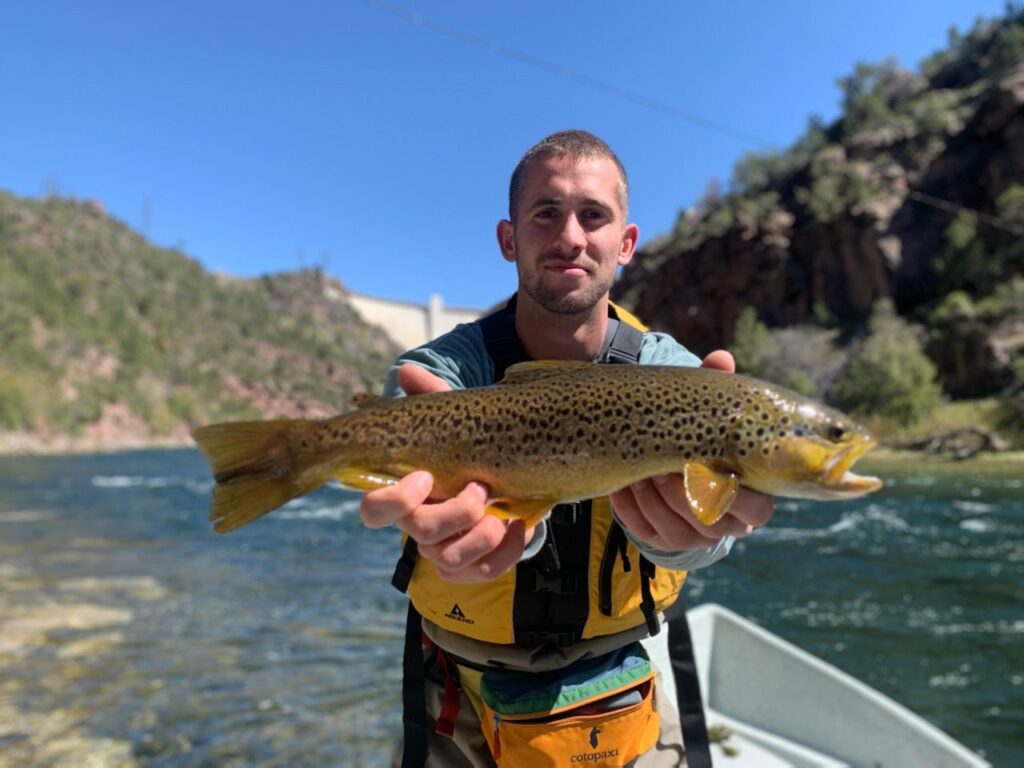
That protected slot is the heart of the green river fishing regulations here. Rather than a simple minimum length limit, the river uses a length-based slot so that mid-size trout, the ones doing the most spawning, stay in the water. It is the reason the Green is one of the most consistent trout fisheries in the West. Utah’s electrofishing surveys have documented some of the highest trout counts in the country in the reaches below the dam, with figures cited as high as roughly 14,000 fish per mile in the most productive water. Those numbers exist because anglers respect the daily limit, the possession limit, and the slot.
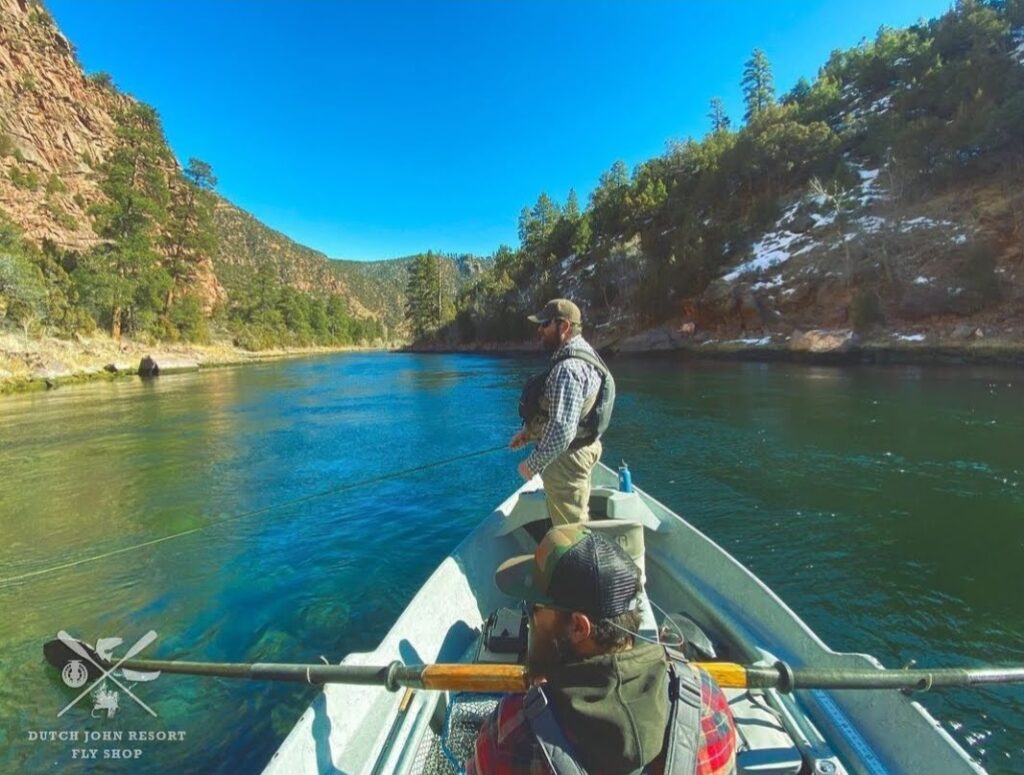
The fishery is commonly divided into three sections. Section A runs from the dam down to Little Hole, roughly seven miles of high-gradient water and the densest trout numbers. Section B is moderate gradient, and Section C below it is slower and known for producing the largest brown trout. The same special regulations apply across all three sections from the dam downstream to the Colorado state line, so you do not need to track a different rulebook as you move down the river.
Possession limit questions come up often on multi-day trips. Plan around the three-trout daily limit and check the current guidebook for how possession is handled before you bank more than a day’s worth of fish.